A company is awarded an important contract. Its monthly production needs increase, yet the factory hasn’t seen a sudden increase in floors, employees with experience or working hours during the day. A temporary increase in production may be possible, but adding another shift can bring new demands for labor as well as training, supervision, and quality control.
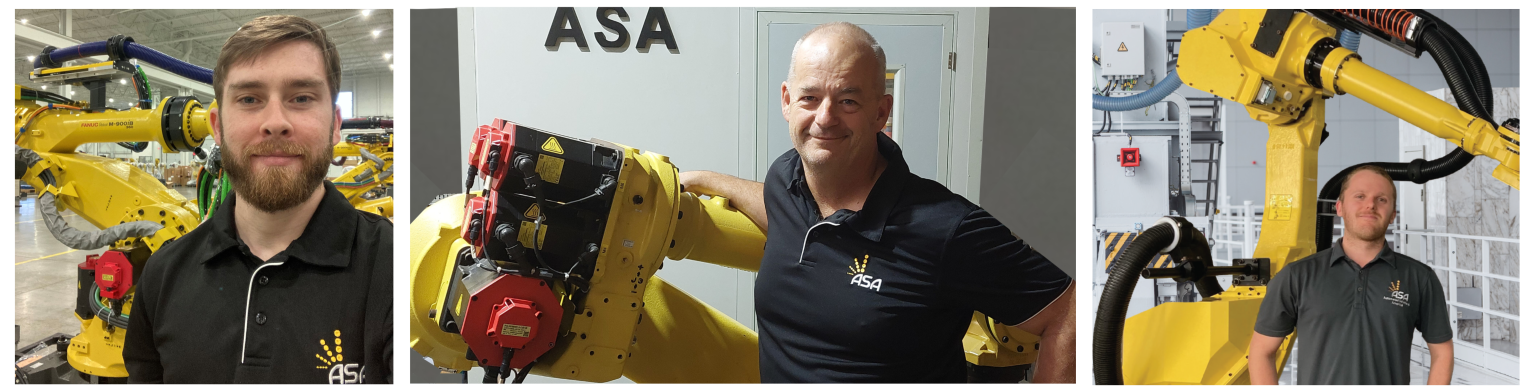
Image credit: automatedsolutions.com.au
Situations like this reveal an important purpose of robotic automation. Robotics is not just replacing humans with machines. It’s a tool that can transform the way that manufacturers utilize their production capacity.
Watch the second-to-second time between products
Inefficient manufacturing is not always evident. A worker may take 15 seconds assembling the component before implementing 10 seconds of materials, and then a few seconds more to move it onto the next stage. For one part the difference appears to be insignificant. These seconds add up when multiplied by thousands.
This is also true of wasted material. Multiplying a small amount of extra coating or dispensing materials across a large production run could lead to a significant expense.
Companies that are thinking about robotic automation Australia will benefit from analyzing these small repeated losses prior to decide what equipment to purchase. The analysis provided by ASA is designed to identify problems with quality and bottlenecks, as also waste and other constraints within a project.
Robots must be able to be integrated into the process.
A robot’s selection is only one of the engineering decisions. The system will also require guarding, tools and controls, sensors conveyors, fixtures electrical integration, as well as communication with the existing production equipment. Engineers need to consider reach and payload while also determining how the robot will move through its work area and interact with the environment surrounding it.
The ASA approach to FANUC robot automation is based on concept development and system design as well as CAD Simulation and offline Programming. Digital simulation lets engineers examine configurations and estimate the cycles before the system is operational at the customer’s factory floor. This is particularly helpful in cases of space limitations or if new robotics require to be incorporated into the existing lines of production.
Dispensing and Paint Shows Why Replicability is Critical.
Controlled movement is crucial for certain manufacturing processes. Imagine applying a coating to hundreds of parts. The desired result isn’t merely the process of completing every component in a short time. The distance, movement speed, and application need be managed from the beginning of the production run to the point of completion.
The experts at ASA are proficient in dispensing and painting across various industries including aerospace and automotive. In these environments industrial robotic automation allows for the ability to repeat, programmed, and controlled movements. It also decreases the risk of exposure for employees to potentially dangerous processes.
Improved control can also cut down on the amount of material used, which can lead to less waste, as well as productivity gains.
The System Will Still Need Personnel After Installation
Automation does not completely eliminate the need for skilled manufacturing. Automation changes the skills needed to maintain and operate the process.
Employees must be taught to operate equipment in a safe manner, identify abnormal behavior or malfunctioning components, and complete any necessary maintenance. The processes and procedures can be changed later in the event that production requirements are changed.
ASA offers on-site training in programming, safe operation, troubleshooting, as well as mechanical and electrical maintenance. It also offers servicing and support on a regular basis to assess the condition of equipment and to address wear and tear over the course of its operating duration.
Capacity is more than just making work faster
The expansion of capacity for Australian manufacturers doesn’t always need to mean purchasing a larger facility or adding more workers to repetitive processes. It’s sometimes more beneficial to inquire about whether the production process could be redesigned.
ASA has developed and integrated automation solutions in Australia since 2002. We also help with projects in other countries. The method is based on the analysis of requirements as well as engineering, simulations FANUC robotic integration, training, and also servicing.
Automation is not the aim. A system that is effective should provide manufacturers something tangible in terms of increased reliability that is consistent in quality, more secure methods, less waste or a larger capacity for the factory that it currently operates.